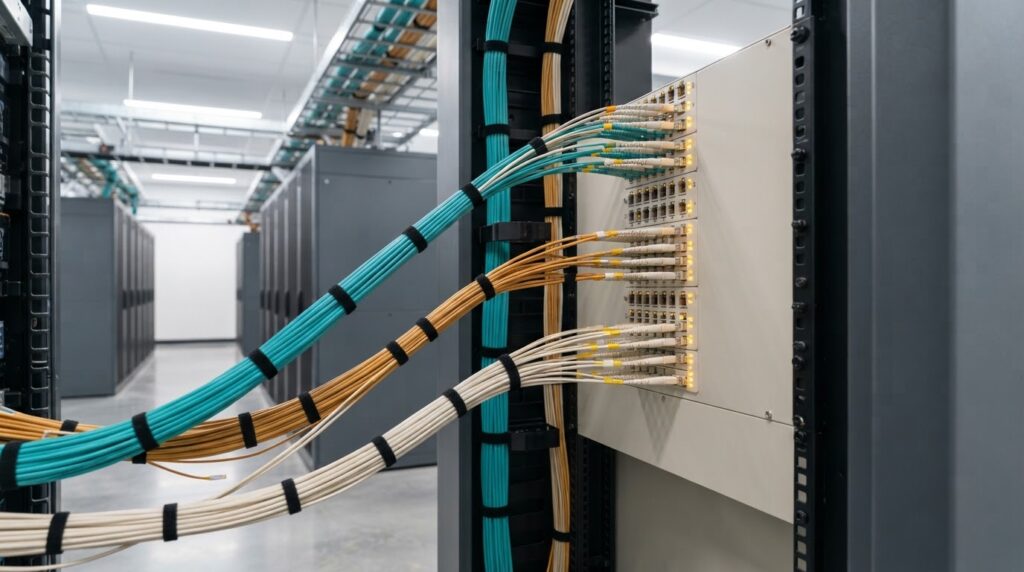
Microsoft Azure ExpressRoute Direct is live at NEXTDC’s B2 data centre in Brisbane. The 26 November announcement adds a third private cloud connection at the Fortitude Valley facility, alongside AWS Direct Connect and Google Cloud Interconnect. For a Queensland business already using B2, Azure traffic can now enter Microsoft’s network locally. NEXTDC says the traffic previously had to travel south to Sydney for that handoff.
The change concerns the point where networks meet. Microsoft distinguishes an ExpressRoute peering location from an Azure compute region. If a company’s application still runs in another city, its traffic must still reach that application after entering Microsoft’s network. A shorter trip to the network entrance is useful, but the news alone gives a customer no measured end-to-end response time.
Three connections to quote from one building
For a provider running its own equipment at B2, the practical change is procurement. It can design private paths to each of the three clouds from one colocation site. Microsoft describes an ExpressRoute Direct circuit as a logical connection with fixed bandwidth mapped to a physical port pair. The customer still has to choose the service that suits its traffic and obtain a local quote for the port and cross-connect.
Take a Brisbane engineering company that keeps large project files on local servers and uses an application hosted in Azure. The provider can compare the old route with the proposed B2 route during a busy working hour. Time a file transfer and a normal application request separately. One measures how quickly a volume of data can move, while the other captures the repeated waits a person experiences as the application responds.
What happens when the handoff is unavailable
Bringing three cloud links into B2 also makes it important to draw the physical paths on a resilience plan. Microsoft supports active-active redundant connections on ExpressRoute Direct. Two ports at one facility protect against different failures from a second path through a separate facility. A customer relying on a single carrier into B2 should establish which links would be lost together and who would initiate failover.
NEXTDC’s announcement names the available services. It supplies no customer tariff, local port availability by speed or independently measured latency reduction. Those figures belong in the provider’s quote and acceptance test. For an existing Queensland customer comparing routes, the news provides a new address at which to ask those questions.